Advice and suggested text for websites
These texts are offered for Triratna centres and groups to use on their websites, in print or on display. They describe Triratna, its founder and its history, and link to triratna.org for the fuller account. Each centre is free to use, adapt or set them aside, as it judges best.
Triratna.org is the public gateway to the Triratna Buddhist Community. It works alongside The Buddhist Centre Online, the home of Triratna’s live content, events and teaching. Text in [square brackets] is for each centre to fill in.
Your 'About' page
Two short texts that sit together on your About page, after your centre’s own introduction.
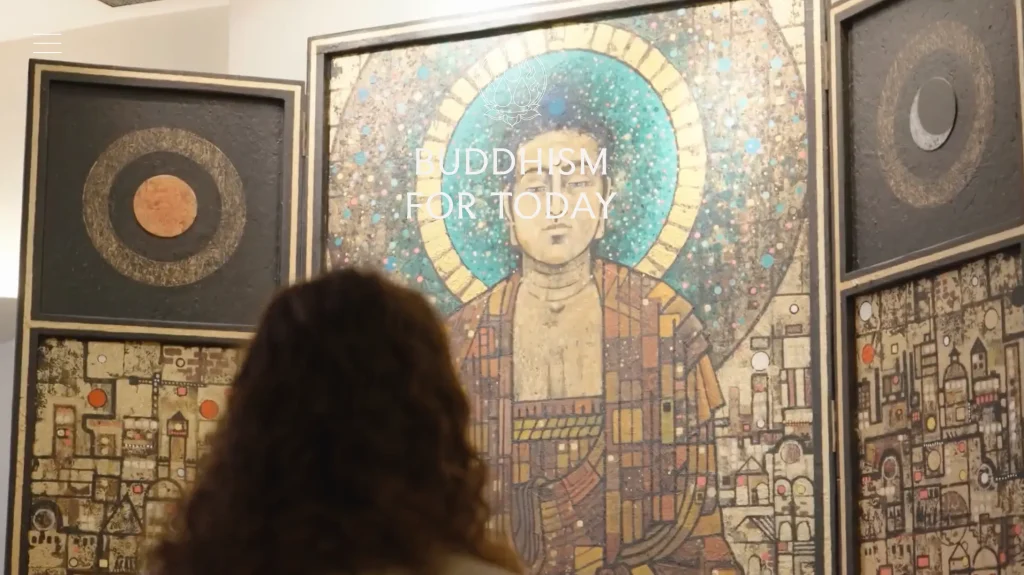
For an example of these texts in use, see the Cardiff Buddhist Centre’s About page.
About Triratna: a short introduction (100 words)
Triratna
[Centre name] is part of the Triratna Buddhist Community, founded in London in 1967 by Sangharakshita and now a global community devoted to bringing Buddhism fully alive in the modern world. We believe the Buddha’s teachings offer a profound account of human experience and a practical guide to living more deeply – as relevant today as they have ever been. At the heart of Triratna is the Triratna Buddhist Order, with around three thousand members worldwide.
Triratna’s history includes some mistakes and difficulties. We’ve worked to understand and address them, and that work continues.
[Suggested button: Learn more about Triratna → triratna.org]
Mentioning Triratna’s history: three wording options
Choose how much to say in the second paragraph of the text above.
Brief: Triratna’s history includes some mistakes and difficulties. We’ve worked to understand and address them, and that work continues.
Naming the founder: Triratna’s history, including the conduct of its founder, has been the subject of controversy and criticism. We’ve worked to understand and address the issues raised, and that work continues.
Link only: For an account of Triratna’s history, including its difficulties and how they have been addressed, see triratna.org/ethics.
Our Ethical Commitment: to sit below the About text (75 words)
Our Ethical Commitment
We want everyone who comes into contact with [Centre name] – whether at a class, on retreat or as part of our sangha – to be safe and treated with respect. Our safeguarding is grounded in [national charity or safeguarding law]. Most of our sessions are led by Order members, each of whom has made a personal commitment to the Buddhist precepts – an undertaking about how they intend to live.
Suggested buttons:
- Safeguarding → [your policy page]
- Complaints → [your complaints page]
- Ethics, History & Safeguarding → triratna.org/ethics
Triratna and your centre: a fuller About text (240 words)
Triratna and [Centre name]
[Centre name] is part of the Triratna Buddhist Community, an international Buddhist movement founded in London in 1967 by Sangharakshita. Triratna now has over a hundred centres around the world, including a large community in India, and tens of thousands of people take part in its activities.
Triratna draws on the whole Buddhist tradition, guided by the core principles that go back to the Buddha himself. Its approach to practice is rounded: meditation goes alongside ethics, study, friendship, devotion and the arts, with the aim of bringing the Buddha’s teaching fully alive in the modern world.
At the heart of Triratna is the Triratna Buddhist Order, with around three thousand members. Order members are women and men who have made a commitment to the Buddhist path; they live in many different ways, and are neither monks nor lay people in the traditional sense. Most of our sessions are led by Order members, and those who want to deepen their involvement can become mitras, or friends, of the community.
[Centre name] is independent, governed by its own trustees and shaped by its local sangha. It also belongs to a wider network of centres, retreat centres and projects that share a common tradition and practice.
Like all human communities, Triratna is a work in progress, and its history includes mistakes and difficulties. We’ve worked to understand and address them, and that work continues.
Learn more about Triratna at triratna.org.
A page on Triratna's history
For centres that want a page of their own, or something to point people to when questions come up.
Shorter: acknowledges the history and links to triratna.org (130 words)
Our History
Triratna was founded in 1967 by Sangharakshita, who died in 2018. His teaching opened the Dharma to thousands of people across the world, and the community he founded continues to grow.
Like all human communities, Triratna is a work in progress. Its history includes controversy and criticism, including of Sangharakshita’s own conduct, and some people have been hurt. Over several years Triratna investigated what had happened, listened to those affected and published its findings in 2020. Safeguarding policies are now in place across Triratna.
We want everyone who comes to [Centre name] to be safe and treated with respect. If you have a concern, please contact our safeguarding lead at [contact details].
A full account of Triratna’s history, and how it has responded, is at triratna.org/ethics.
Fuller: says what happened, in the words of triratna.org (270 words)
Ethics, History & Safeguarding
Triratna was founded in 1967 by Sangharakshita, who died in 2018. His teaching opened the Dharma to thousands of people across the world, and the community he founded continues to grow. Alongside his many gifts, some of his actions caused lasting pain. During the 1970s and 80s he had sexual relationships with a number of men in the community, some of whom describe confusion and lasting distress. In 2016 he expressed regret for harm he had caused.
Over nearly four years, a group of senior Order members investigated what had happened, listened to those affected and facilitated restorative conversations. Their findings were published in full in 2020. We believe it is possible to be grateful for what Sangharakshita gave while recognising the damaging effects of some of his actions.
We want everyone who comes into contact with [Centre name] to be safe and treated with respect. We have a safeguarding policy, a trained safeguarding lead, and trustees who are accountable for keeping the centre safe. Triratna’s ethical guidelines make clear that sexual relationships between teachers and those they teach are not acceptable.
Most of our sessions are led by Order members, who have made a personal commitment to the Buddhist precepts, sustained through friendship, study and regular contact with other Order members. Where conduct falls seriously short, Triratna’s College of Public Preceptors can suspend or remove someone from the Order.
We don’t claim every question has been resolved. What matters is that we meet problems honestly.
If you have a concern, please contact our safeguarding lead at [contact details]. To read more, visit triratna.org/ethics.

A page about Sangharakshita
For centres that want to introduce Triratna’s founder.
Standard: his life and teaching (230 words)
Sangharakshita was an Englishman who was ordained as a Buddhist monk and lived in Asia for two decades. In Kalimpong, in the Himalayas, he learned from teachers of the Theravada, Tibetan and Chinese traditions, and worked with the followers of Dr B. R. Ambedkar, who had converted to Buddhism to escape the caste system. He returned to the UK in 1964, and in 1967 founded a new Buddhist movement, then called the Friends of the Western Buddhist Order.
He saw Buddhism as a unity, drawing on the whole Buddhist tradition in the light of the core principles that go back to the Buddha himself. At the heart of his teaching was Going for Refuge to the Buddha, Dharma and Sangha: commitment to the Buddhist path mattered more than whether one was monastic or lay. The Order he founded is open equally to women and men living in a range of ways. He stressed a rounded spiritual life, with meditation alongside study, ethics, friendship, devotion and the arts.
Sangharakshita lived in the UK for the rest of his life, dying in 2018. He was a prolific teacher and writer, and a friend and mentor to many. He was a key figure in the transmission of Buddhism to the West, and Triratna has a large following in India.
Learn more about his life and work at sangharakshita.org
Full: a fuller account of his life (400 words)
Sangharakshita was born Dennis Lingwood in Tooting, South London, in 1925. Confined to bed for several years as a child, he read prodigiously, and at sixteen, after reading the Diamond Sutra and the Sutra of Wei Lang, he realised he was a Buddhist. Conscripted in 1943, he was posted to India and Sri Lanka. After the war he stayed on, spending two years as a wandering ascetic before being ordained as a Buddhist monk and receiving the name Sangharakshita, ‘one who is protected by the spiritual community’.
For fourteen years he lived in Kalimpong, in the Himalayas. He learned from Tibetan teachers who had fled the Chinese occupation, studied Ch’an with a Chinese teacher, and read across all the Buddhist traditions, seeking the essential truths that unite them. His book A Survey of Buddhism (1957) set out that understanding. From 1956 he worked with the followers of Dr B. R. Ambedkar, who had led a mass conversion to Buddhism to escape the caste system, touring central India each winter to teach the new Buddhists.
Invited back to England in 1964, he found a growing interest in Buddhism and decided to stay. Convinced that Buddhism in the modern West needed a new approach, he founded the Friends of the Western Buddhist Order in 1967, and the following year conducted the first ordinations into the Western Buddhist Order.
He had concluded that what mattered was not whether one was monastic or lay, but the depth of one’s commitment to the Buddha, Dharma and Sangha – what Buddhists call Going for Refuge. The Order is united by that commitment and includes women and men living in a range of ways. He stressed a rounded spiritual life, with meditation alongside study, ethics, friendship, devotion and the arts, and drew on Western literature and philosophy to make Buddhist teachings meaningful to modern people without losing their depth.
The movement grew into a worldwide network of centres, retreat centres and projects, including substantial Dharma and social work in India, and in 2010 became the Triratna Buddhist Community. From the late 1980s Sangharakshita gradually handed responsibility to senior Order members. He spent his final years at Adhisthana in Herefordshire, and died in 2018. His teaching lives on in his many books and in the community he founded.
Sangharakshita was the subject of both controversy and criticism, which Triratna has worked to acknowledge and address. This is described at triratna.org/ethics.
Learn more about his life and work at sangharakshita.org
Print and Display
Sangharakshita: short version for noticeboards and leaflets (150 words)
Sangharakshita was born in London in 1925. He was ordained as a Buddhist monk in India and lived in Asia for two decades, learning from teachers of several Buddhist traditions and working with the followers of Dr B. R. Ambedkar, who had led a mass conversion to Buddhism. He returned to the UK in 1964, and in 1967 founded a new Buddhist movement, then called the Friends of the Western Buddhist Order. His underlying approach was to see Buddhism as a unity, drawing on the whole Buddhist tradition in the light of the core principles that go back to the Buddha himself.
Sangharakshita lived in the UK for the rest of his life, dying in 2018. He was a prolific teacher and writer, and a friend and mentor to many people, and a key figure in bringing Buddhism to the West.
Learn more about his life and work at sangharakshita.org
Using the history texts on display
Either history text works on a noticeboard or as a framed text. Replace the final line with your centre’s safeguarding contact and the address triratna.org/ethics
The full account
Reproducing the Ethics, History & Safeguarding page (1,100 words)
Centres may reproduce the Ethics, History & Safeguarding page (triratna.org/ethics) in full, with two changes:
- under Raising a Concern, put your centre’s own safeguarding lead first, then the Safeguarding Consultant
- add a line saying the text is reproduced from triratna.org/ethics, with a link
Adapting the texts
Worth keeping:
- Sangharakshita named as founder
- the links to triratna.org and triratna.org/ethics, so the fuller account is always one click away
Likely to need adapting:
- the legal reference in Our Ethical Commitment, to fit your country
- “Most of our sessions are led by Order members”: change to match who teaches at your centre
layout and button labels, to fit your site’s design - translation, keeping the meaning of the history sentences intact
Plain statements usually read better than reassurance about how seriously things are taken.